 NARU
NARU
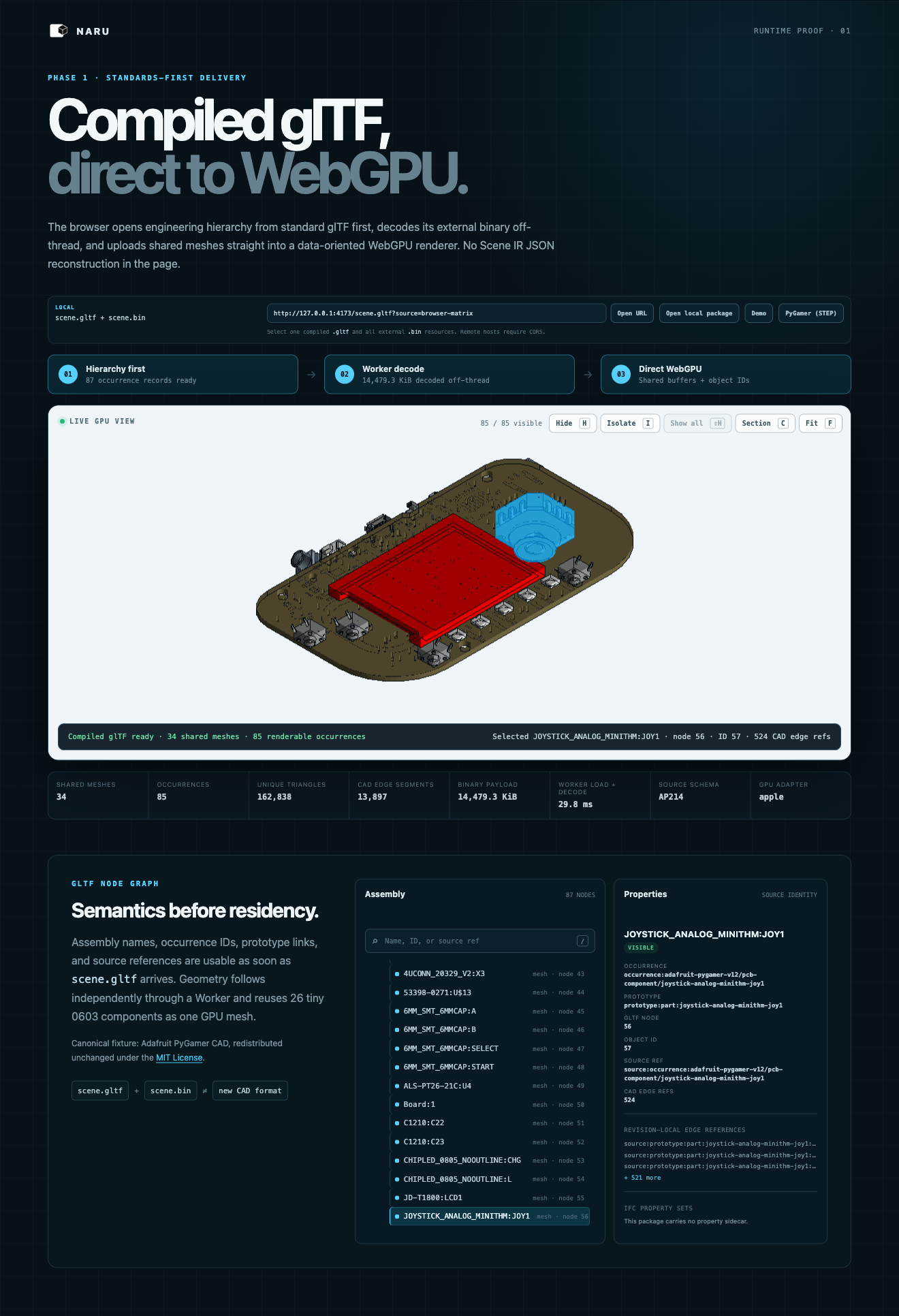
A real STEP assembly, end to end
Adafruit's PyGamer board: 85 part occurrences sharing 34 meshes, 162,838 unique triangles, and source-aware picking — identical behavior in Chrome and Firefox.
Browser matrix evidence →
An open-source studio, compiler, and WebGPU runtime for massive CAD, BIM, and engineering scenes. Delivery is standard glTF 2.0 over plain HTTP Ranges — this entire demo is served by GitHub Pages, with no backend and nothing to install.
Requires a WebGPU-capable browser (current Chrome, Edge, or Firefox;
Safari from Safari 26 on macOS 26). You can also open your own
compiled .gltf package — it loads entirely client-side.
Every card below is a committed evidence record that CI re-validates on every merge. The screenshots are the exact captures those records pin by digest — click through for the numbers, hardware, and the commands that reproduce them.
Adafruit's PyGamer board: 85 part occurrences sharing 34 meshes, 162,838 unique triangles, and source-aware picking — identical behavior in Chrome and Firefox.
Browser matrix evidence →
The 839.9 MB seven-discipline sixty5 model reaches
a first coarse frame of all 78,173 renderable occurrences in a
4.3 s median — down from a 268.0 s baseline.
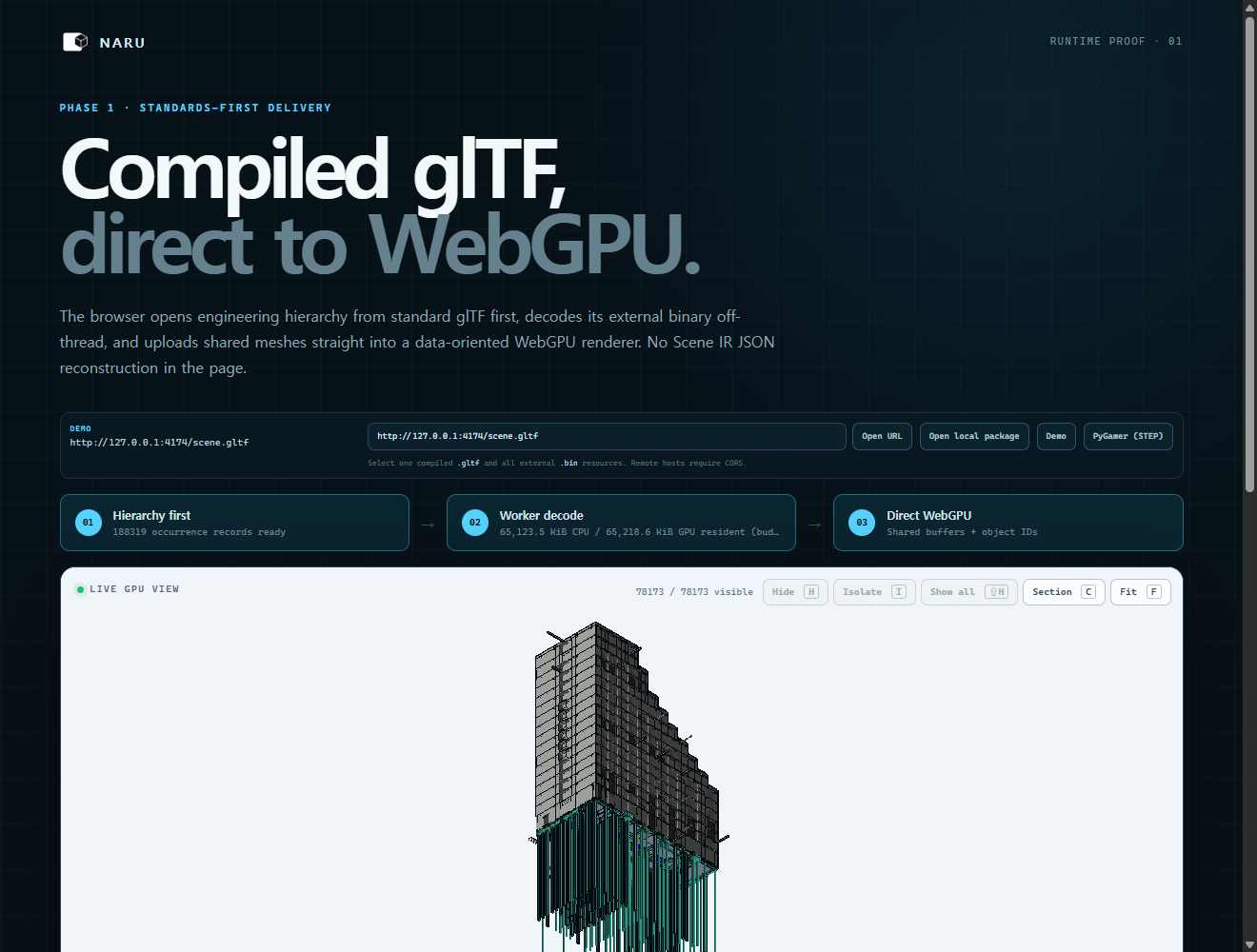
Fixed 64 MiB decoded and GPU budgets hold at any scene size; chunks the budget cannot take are priced from the compiled document and never downloaded.
Residency evidence →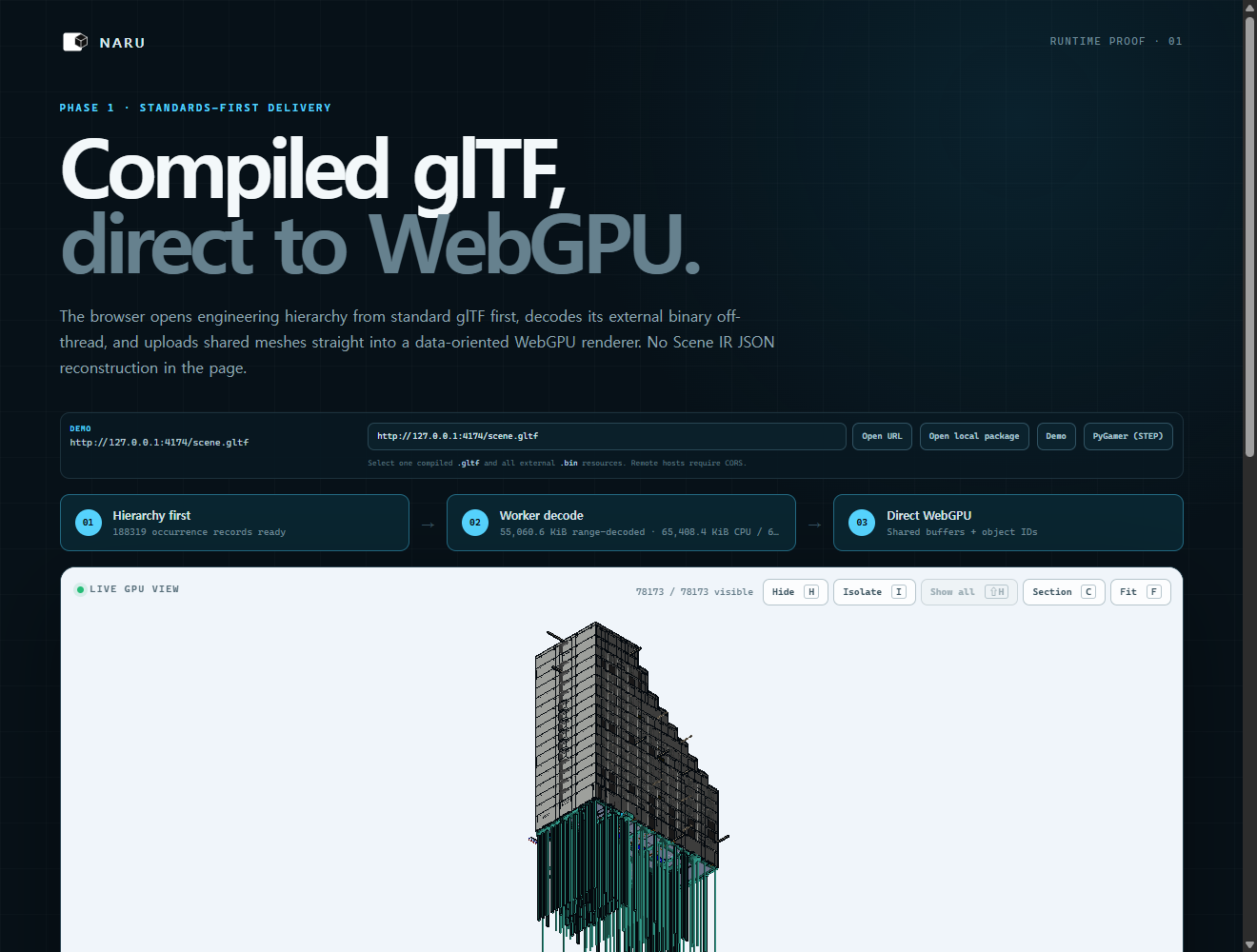
A picked foundation beam resolves to its source IFC entity and lazily fetches its property sets from the package sidecar — no Scene IR intermediate in the browser.
Real-large browser evidence →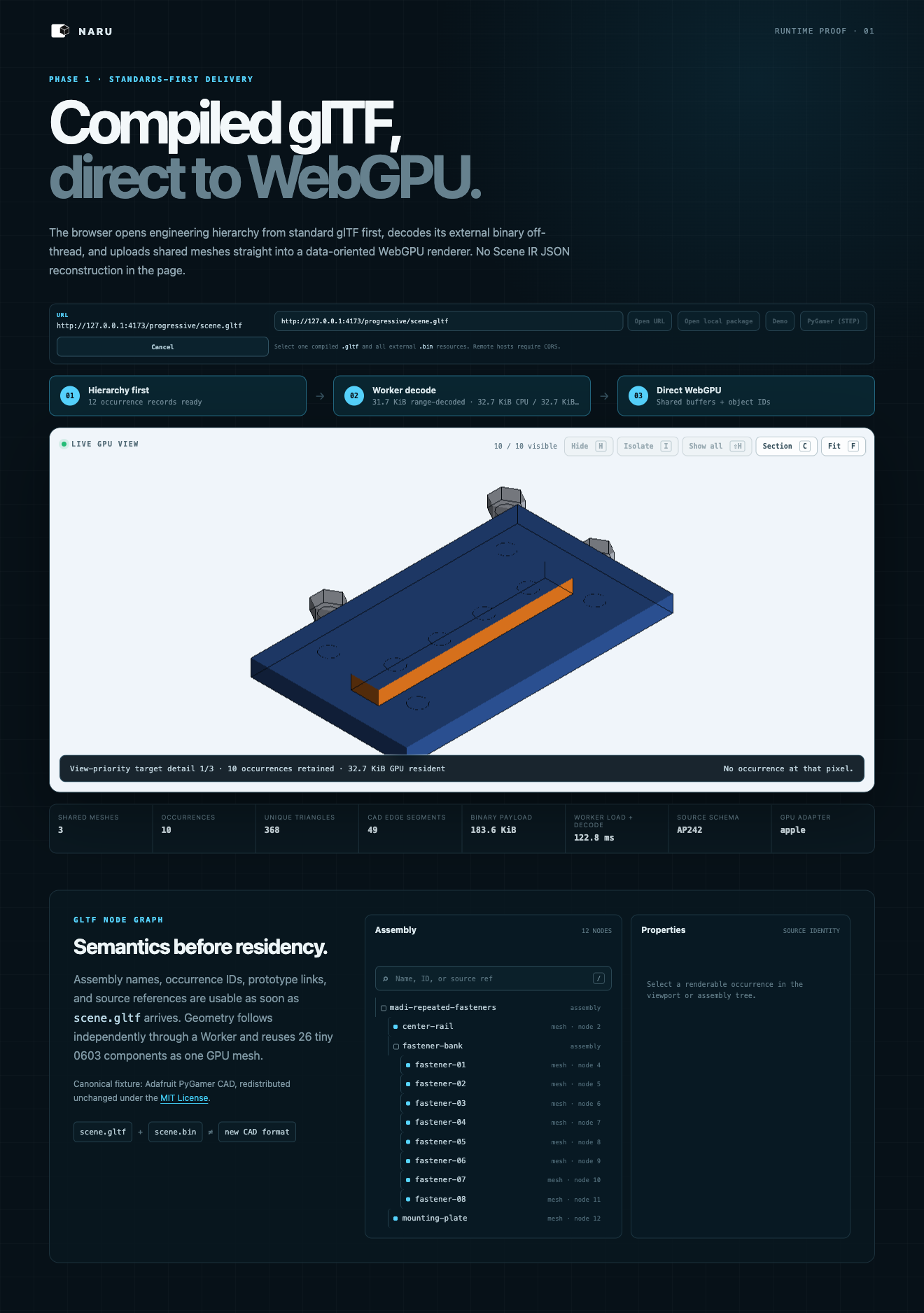
A coarse WebGPU frame renders before the first target Range completes, and mixed coarse/target frames follow per completed range — recorded under a delayed network.
Browser matrix evidence →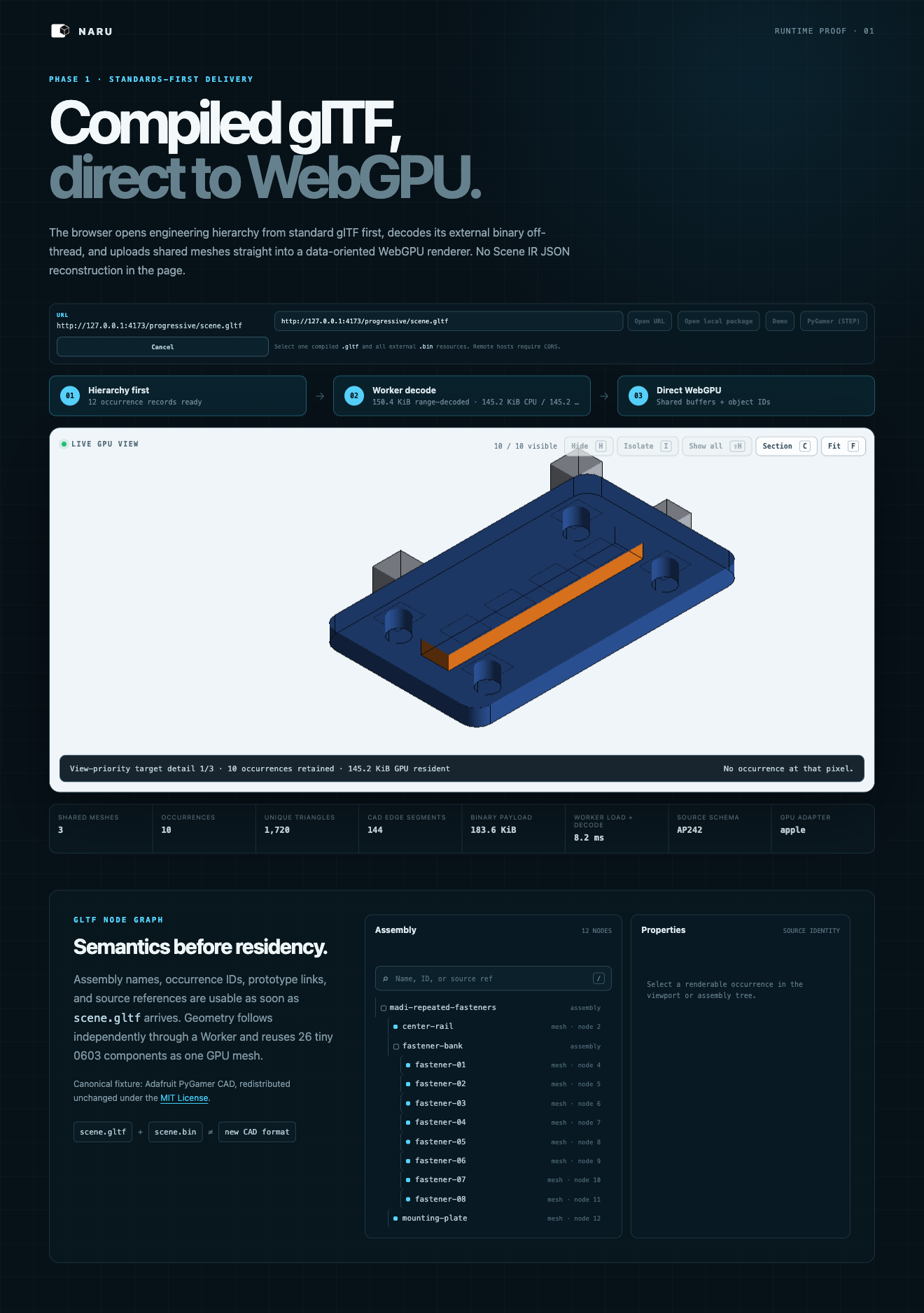
Panning aborts the obsolete Range request and its Worker decode, and the newly hottest chunk is requested first — in Chrome and Firefox.
Browser matrix evidence →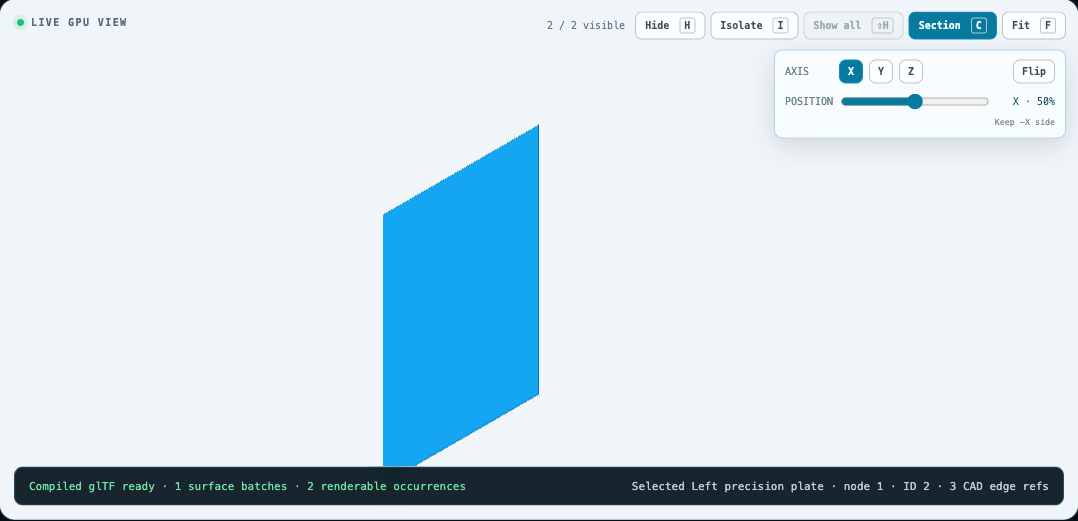
A 0.25 mm plate gap compiles with ≤ 0.001 mm error and renders with zero pixel drift between near and far scenes, through navigation, sectioning, and picking.
Precision evidence →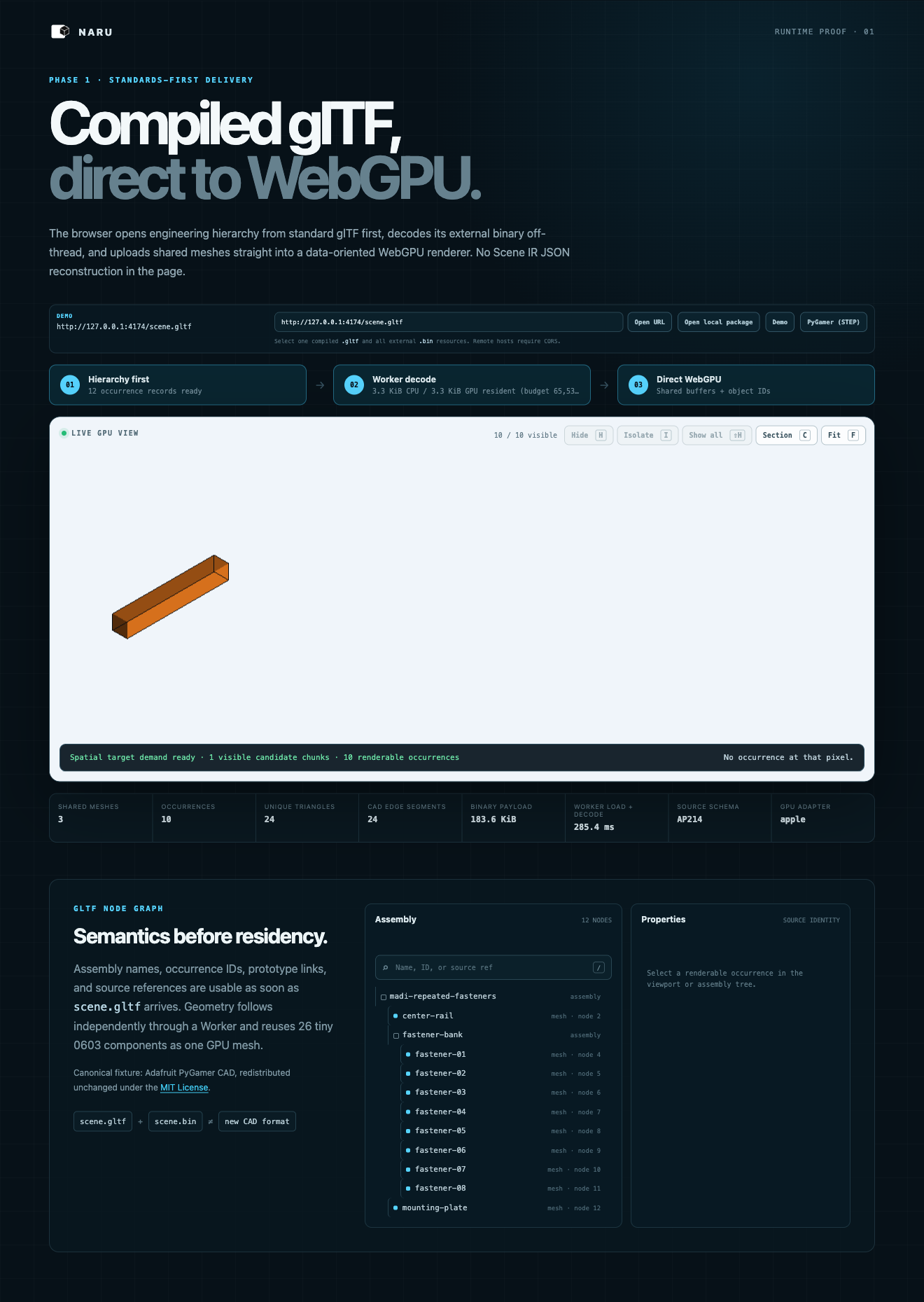
An opt-in compiler-built BVH lets a localized view demand 152 instead of 209 of 234 chunks on the same federation, cancelling obsolete Ranges before their bodies arrive.
Spatial demand evidence →
Compiles are deterministic — two full runs of the same source produce
byte-identical JSON, binaries, and reports — and unchanged sources
restore from a verified persistent cache in seconds
(cache evidence,
ADR-0009).
The roadmap advances only when a capability is reproduced in this
repository: validators hardcode digests and counts on purpose, and
pnpm check re-runs all of them in CI. Read the
roadmap
and the
Phase 1 completion report.